Showing posts with label Sydney. Show all posts

Monday, 27 July 2026

The names behind the Lithuanian Business, Maistas continued...

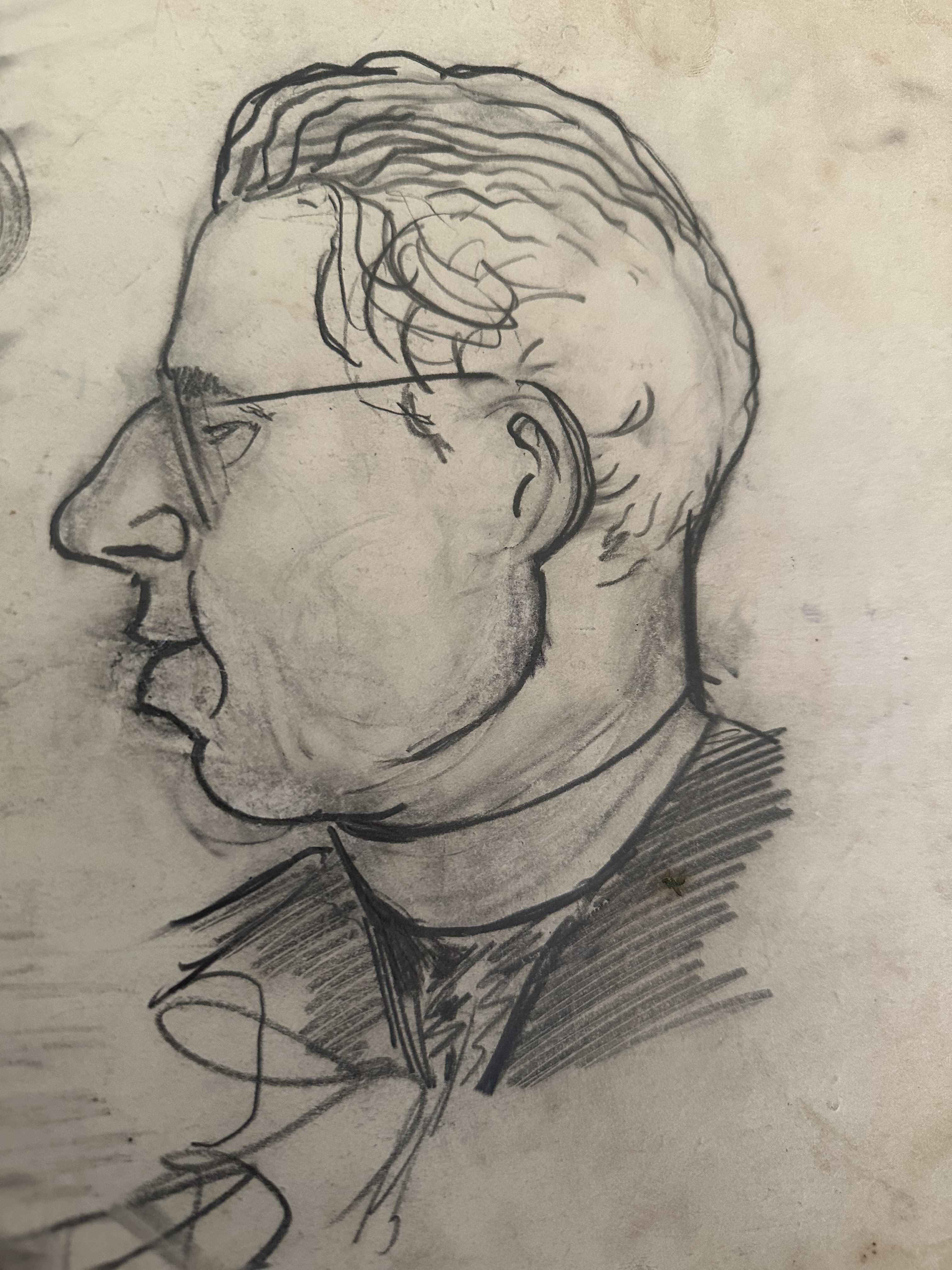
Pranas Švarcas

Pranas Švarcas was born on 6 May 1905 in Sudargas village, Šakiai district, Lithuania, into a farming family. After graduating from the Jurbarkas Secondary Gymnasium, he was called up for military service. Following his discharge to the reserve, he remained at home for a period before joining the Lithuanian border police.

During his service in the police force, Pranas married, although the couple did not have children. When the Soviet Army advanced into Lithuania for the second time, Pranas and his wife were forced to flee their homeland and seek refuge in Germany. There, he found employment at the Wolff arms factory.

In 1948, Pranas arrived in Australia. After a short period in a migrant transit camp, he was sent to Sydney to complete his two-year employment contract as part of the post-war migrant labour program.

He worked in the water supply department, where his duties included digging trenches for the installation of sewerage pipes. After completing his contract, his dedication and reliability were recognised, and he was offered a position in the laboratory of the same organisation. He accepted and continued working there until his retirement.

Pranas was remembered as a devoted Lithuanian and a strong patriot. He had a particular love for Lithuanian history and maintained a deep connection with his homeland. Although he did not belong to formal organisations, partly because he preferred to avoid organisational disagreements, he supported Lithuanian life in his own quiet and practical way.

During the construction of the Lithuanian Hall in Bankstown, Pranas willingly volunteered his time and skills, helping with various building tasks. He took great pride and happiness in seeing a permanent home being created for the Lithuanian community in Sydney.

On 6 May 1983, Pranas Švarcas passed away suddenly at his home in Bankstown, on his 78th birthday.

His funeral Mass was held on 11 May at Lidcombe Church and was celebrated by Rev. P. Butkus, with Fr. A. Savickas playing the organ. Following the service, family members and friends accompanied Pranas to his final resting place at Rookwood Cemetery.

May he rest peacefully in Australian soil, far from the beloved homeland he carried in his heart.

 1983-05-30-MUSU-PASTOGE.pdf p.2

Monday, 20 July 2026

The names behind the Lithuanian business, Maistas

Juozas Grybas  

1909.3.13- 4 December 1995

Juozas Grybas was born in Kudirkos Naumiestis, Lithuania. After his parents moved to Jurbarkas, he spent his childhood and part of his youth there. Later, he moved to Kaunas, where he gained valuable experience working at the Lithuanian “Maistas” enterprise.

Returning to Jurbarkas, Juozas continued his involvement in community life. As an active member of the Lithuanian Riflemen’s Union (Šauliai), he established a Shooting Club in the town. His professional journey later took him to several locations and organisations, including four years working at Baltijos Lloyd in Klaipėda, as well as positions with “Maistas” in Klaipėda, Šiauliai and Naujoji Vilnia.

In 1944, as the Red Army advanced towards Lithuania for the second time, the Grybas family was forced to leave their homeland and seek refuge in Germany. After spending five years there, they emigrated to Australia, arriving in 1949 and being placed at the Greta Migrant Camp in New South Wales.

After completing his two-year employment contract, the family settled permanently in St Ives, Sydney.

Drawing on his extensive experience in trade and the meat industry, Juozas, together with his partners, established a meat products factory. The business became a great success, and for approximately ten years its products were enjoyed not only by the people of Sydney, but also by communities in Newcastle and Wollongong.

After retirement, Juozas enjoyed a quieter life surrounded by nature. He found happiness in fishing, gardening and spending time outdoors.

The Grybas family was a wonderful example of dedication to the Lithuanian community. They were regular participants in Lithuanian church services, cultural events, preparations and concerts. Lithuanian affairs always remained one of their highest priorities. They supported the community wholeheartedly and never passed the donation table without contributing, regardless of who was collecting funds.

Following the funeral service, Juozas Grybas’ remains were accompanied by family, friends and members of the Lithuanian community to their final resting place in the Lithuanian section of the cemetery.

 1995-12-18-MUSU-PASTOGE.pdf p.11 by AVK

Sunday, 28 June 2026

Maistas: A New Lithuanian Enterprise in Australia


In 1955, a Lithuanian meat trading and smallgoods manufacturing company known as “Maistas” was established in Sydney. The company was founded by five Lithuanian community members: Jonas Šlyteris, Juozas Grybas, Gediminas Umbražiūnas, Pranas Švarcas and Vacys Ambraška.

The company began by purchasing a butcher shop in Dulwich Hill and, within a short period, successfully increased its turnover fourfold. However, selling meat was only the beginning of their vision. From the very first days, plans were underway to establish a purpose-built meat processing operation.

After acquiring the necessary machinery, completing the factory facilities, and receiving approval from health and other regulatory authorities, production commenced. The machinery of “Maistas” began operating, and clouds of smoke rose from the smokehouse as traditional Lithuanian-style smoked meats and sausages were produced.

On 12 August, the shareholders, together with several invited guests, modestly celebrated the official opening of the company.

At the beginning, “Maistas” employed six people and processed more than 1,000 kilograms of meat each day. The company produced a range of European-style smallgoods, including salami, mortadella, liverwurst, frankfurts and smoked ham.

Production was supervised by Juozas Grybas, who brought valuable experience from Lithuania, where he had worked for many years in the Lithuanian “Maistas” factories managing sausage and other processed food departments.

The name “Maistas” carried a special meaning for Lithuanian immigrants. In Lithuania, the original Maistas was a major state-owned meat industry and trading company established in 1923, with its headquarters in Kaunas, operating until the Soviet occupation in 1940. The word maistas simply means “food” in English, but for many Lithuanians it represented quality, tradition and memories of their homeland.

The new Australian “Maistas” proudly continued this tradition. Its modern equipment, strict cleanliness standards and dedication to quality reflected the values of the Lithuanian company that had inspired it. The owners hoped that their sausages, hams and other products would satisfy not only Lithuanian customers but also the wider Australian community accustomed to European flavours.

To support the Lithuanian community, compatriots were offered discounts of up to 20% when purchasing “Maistas” products directly from the company, with home delivery also available.

The company operated successfully for approximately ten years, becoming another example of the determination, enterprise and cultural commitment of Lithuanian migrants building new lives in Australia.

Musu Pastoge Wed 17 Aug 1955


Saturday, 25 April 2026

The Sydney Chicken Farmer


Aleksandras Šalūga arrived in Australia in 1949. After trying work in a factory, he went to work part-time on a farm. The farm had a very neglected young garden and was not very profitable. Aleksandras suggested to the owner that he buy 1000 chickens as joint property and start a chicken farm. The chickens made a good profit and Aleksandras suggested to the owner to expand the chicken farm to 5000 chickens. The owner did not want to agree to this, because he was more interested in tidying up the neglected garden. Due to misunderstandings that arose, Aleksandras left the farm, and since he did not survive the time specified in the contract, he had to give up half of the chickens he owned. Then he rented a chicken farm without chickens for 4 pounds a week and, having bought 1500 chickens, began farming independently. His wife looked after the chickens, and he himself found work to earn money for chicken feed and rent. But the farm he rented did not satisfy Aleksandras. A year later he bought a 10-acre plot in York Road, Kellyville, suitable for a chicken farm. When buying the farm, it was taken into account that it would have shelter from the south, a slope to the north, and most importantly, that chickens had not been kept on that farm before, because due to the widespread diseases of chickens, one could buy a farm not only with all the amenities, but also with various diseases that have led many a chicken farmer to bankruptcy.

The farm was named "Sodyba". Having quickly arranged and renovated the farm, he moved into it with his own 1200 chickens. He gave up his job because he had to manage his farm, and besides, the chickens gave him enough income to live on and buy building materials. For example, this year Aleksandras received about 800 pounds from a hatchery of 1000 chickens. Feed cost 300 pounds. After the hatching season, he sends the eggs to the Egg Marketing Board and receives about a third less. Aleksandras says that in general, it is impossible to say that chickens are very profitable. This depends on the number of chickens, their breed and age. There are a lot of chicken diseases in Australia, and they need to be fought with dedication. 

In 1958, Aleksandras purchased an orchard farm at Cairns Rd, Glenorie, near Sydney.  He had about 1000 fruit trees, aged between 12 and 25 years old. 

Aleksandras died in July 1970, aged 66–67 of heart disease. He is buried Field of Mars Cemetery, Ryde, City of Ryde, New South Wales.

Photo from Musu Pastoge but enhanced with AI.

Sources

  • 1953-11-02-MUSU-PASTOGE
  • 1958-01-27-MUSU-PASTOGE
  • SALUGA Aleksandras [aka SHALUGA Alexander] born 9 February 1903
  • SALUGA Sigrida [aka SHALUGA Sigrid] born 25 September 1904
  • Kristen Mercer Local History and Information Services Officer The Hills Shire Council


Monday, 2 February 2026

Juozas Maksvytis, the first Lithuanian to graduate from the University of NSW


Juozas was the first Lithuanian to graduate from the University of NSW. Eighteenth and seventh president of the Australian Lithuanian Community.

Juozas was a person devoted to science, loved music and song, and had a sense of responsibility for Lithuanian community work, and everything was connected with a sense of the beauty of life, with undying optimism.

Juozas Maksvytis was born on November 7, 1924, in Grūšlaukė, Salanta village, Kretinga county, in the family of a pharmacist, the middle of seven children.  In 1938 he joined the scouts in Taurage and in 1944 graduated from Plungė Gymnasium.

After moving to Germany, due to the occupation of Lithuania, he gained a degree in electrical engineering, graduating from Nürtingen-Schwäbisch Gmünd Lithuanian Technical School in 1948.

In 1949 he arrived in Australia on the Svalbard 29 June 1948, his younger sister, also came to Australia a few months before him.  Juozas completed a two-year work contract at a factory in Yallourn, Victoria. After moving to Melbourne, he immediately got involved in national cultural activities, such as Lithuanian folk dancing. He enrolled into the University of Melbourne, but due to his limited English he was unable to complete the course.

In 1952, Juozas moved to Sydney, where in August 1954 he married a fellow Lithuanian.  They had two daughters.  He again enrolled into the newly opened University of NSW, Faculty of Science and Mathematics.  In 1959 he received his diploma in applied chemistry and in 1960 received a Bachelor of Science degree. 

He worked during the day and studied in the evening; he had to support his family.  It was reported that chemistry student Juozas Maksvytis, had become the first radioactive person in Australia. While studying in the chemistry labs he helped to remove from the laboratory a container with radioactive material.  It was later noticed that liquid had leaked from the leaden container that he had been carrying.   After conducting tests, it was established that his wrist was radioactive. The university took urgent measures, and he spent 14 days in hospital, where intensive blood tests were carried out.  He survived.

From 1963-64 and 1969-70 Juozas was a member of the Regional Board of Australian Lithuanian Community (ALC).  From 1973-75 Juozas was the chairman of the Sydney area of ​​ALC, and when Gough Whitlam recognised the Baltic States incorporation into the Soviet Union, Juozas was a member of the BAG (Baltic Action Group), who actively fought for the cancellation of the recognition.

In 1983-84, Juozas was again a member of the ALC Regional Board and simultaneously the chairman of the ALB Cultural Council.

He worked as a biochemist at St. Vincent's Hospital, until his retirement in 1987.  By then he was head of the hormone research department.

The following year he studied philosophy and history at Macquarie University, then 1991-92 he attended a museum management courses (graduated in November 1992), and since 1993 worked with the University of Third Age until his death.

In 1989 to 1990 Juozas again served on the ALC board as chairman.  From1995 he actively joined Sydney Lithuanian sports club "Kovas" and played golf.

Juozas had a lifelong love of music.  Since 1954 he sang in the Sydney Lithuanian choir and saw him join Algis Plukis "Rozytės", later he performed with his own group "Tie patys".  After the creation of the "Ansamblio" choir, Juozas helped this choir prepare individual voices, occasionally conducting the choir himself in concerts.  Since 1960 until 1970 for a whole decade, Juozas was a singing and music teacher at the Sydney Weekend School.

Juozas even composed a series of his own songs and hymns, such as "Longing", for which he wrote the music and lyrics.  Juozas performed in the opera "Aida" in the chorus of the Sydney Opera House.  In 1996 Juozas sang in four Australian choirs: Sydney Men's Choir, Sydney Mixed Choir, Beethoven 9th Symphony Society Choir and University of Third Age Choir.

Since 1975 he acted in the Sydney Lithuania "Atžala" theatre, in 1980 he switched to directing and theatre administration. Together with Paulius Rūtenius, he organised the first Lithuanian theatre festival in Australia.

On 2 February 1977, the sad news about the unexpected death of Juozas Maksvytis, was received which painfully shocked his large group of friends and acquaintances.

Monday, 12 January 2026

Mykolas Zakaras - Eleventh President


Mykolas was born on October 21, 1909, in the Urniežiai farmstead, Dotnuva parish, Kėdainiai county, into the family of a wealthy farmer.  He grew up with five brothers and three sisters. Mykolas was the eldest in the family.  He attended primary school in Dotnuva, continued his secondary education in Kėdainiai and Kaunas, at the Pavasaris Higher Commercial School (Gymnasium). He completed his higher education in Klaipėda, where he studied at the Institute of Trade.  He also attended the Faculty of Natural Sciences and Mathematics of Vytautas Magnus University, but was unable to complete his studies, as the University was closed during the German occupation.  He performed his military service in the Sixth Squadron of the Military Aviation, in Šiauliai. He graduated with the rank of private.  He worked as a bookeeper  for the Electrical station in Telšiai from 1938 – 1944.  In addition to Lithuanian, he was fluent in three languages, German, Russian and Polish.

On 21 January 1942, Mykolas Zakaras and nurse in the Resurrection
Church in Kaunas.  A daughter was born in Kaunas. The family moved to Germany in 1944, due to the Soviet reoccupation of Lithuania. Mykolas worked in a factory at Schwopnitz, Saxonia Germany and later from 1945 as a checker in a warehouse for the IRO in Hanau Germany.   A son, was born in 1945, Germany 

After the war, they emigrated from Germany to Australia, where they lived in the Sydney suburb of Kingsgrove.

Mykolas worked hard in a glass factory, settled down nicely and took care of his children's education, and when they grew up, he joined the activities of the community. 1961-1962 Mykolas took up the position of Chairman of the Bankstown District Board, later in 1963 he was elected to the Regional Board of the Lithuanian Community of Australia.  In 1969, after the death of the then Chairman of the Regional Board of the ALB, Stasys Narušis, he briefly took over the position of the former Chairman.

In 1967, Mykolas Zakaras joined the Sydney branch of the Lithuanian Veterans Union "Ramovė". He was active in this union and a dutiful member, often elected to the branch board, he held various positions. For his exceptional kindness and merits to the Lithuanian soldiers, united in the Lithuanian Soldiers Veterans Union "Ramovė", on May 20, 1989, he was elected an honorary member of the union.

On 16 August 1985 Mykolas passed away.  On the 21st friends and acquaintances accompanied Mykolas on his last journey to the Rookwood cemetery. Mindaugas Šumskas gave a farewell speech at the grave, remembering his contribution to the creation of the Bankstown Lithuanian House and his work in the activities of the district. Juozas Dambrauskas also mentioned Mykolas' merits in sports activities, for which he was elected an honorary member of "Kovas".

Sunday, 21 December 2025

Simas Narušis - All my achievements and work are for you, Lithuania

Simas was born on 13 March 1899 and passed away on 23 December 1969. He was born in Karališkiai, near Jurbarkas. In 1927, he completed his studies at a school in Kaunas, and from 1930 to 1931 he studied law at Vytautas Didysis University. He married Vanda, and they did not have children.

Simas volunteered for the newly established
Lithuanian Army and, in 1933, attained the rank of Major. During the Second World War, he organised and led independent military units in the eastern regions and fought against enemies of Lithuania.

Upon arriving in Australia, he immediately became active in Lithuanian community life. He served on the committee of the Sydney Lithuanian Society, where he worked tirelessly to organise cultural and community events. From 1965 until his death five years later, he was President of the Australian Lithuanian Community.  During this time, he visited every Lithuanian community across Australia, including the smallest branches. He maintained close ties with scouts, youth organisations, and sports clubs, and consistently encouraged Lithuanians to work not for personal gain, but for the good of the Lithuanian nation and community.

In recognition of his dedication, the Latvian community in Australia awarded him a silver medal in 1968 for his efforts and contributions to the struggle for Baltic freedom. In 1969, Simas represented Australia as a delegate at the World Lithuanian Community Parliament, where he was honoured with another medal. Despite suffering from cancer, he travelled to New Zealand to meet with the Lithuanian community there.

Simas lived by the motto: “Visi mano atsiekimai ir darbai – Tau, Lietuva!”“All my achievements and work are for you, Lithuania.” His passion and devotion to Lithuania were deeply felt, and his death was a profound loss to Lithuanians throughout Australia. At his funeral, a guard of honour composed of Lithuanian scouts, members of the Federal Council, Ramovė, and the Sydney Lithuanian Committee stood beside his casket, which was draped with the Lithuanian flag.

Several years later, on 14 March 1971, the community gathered at Simas’s grave to commemorate his life and bless the newly placed headstone. The black granite headstone was designed by engineer A. Jakštas and features a white cross and the Gedimino stulpai carved into the lower corner. It stands in the Lithuanian section of Rookwood Cemetery in Sydney.

Saturday, 29 November 2025

The Engineer and the President, Balys Daukus


Balys Daukus was born on 23 November 1900 in Samanių village, Južintai region, Rokiškis district, under the surname Dobkevičius. During Lithuania’s struggle for independence, he restored his great-grandfathers’ original surname, Daukas.

After completing elementary school, he enrolled at the Daugavpils Gymnasium. With the outbreak of World War I, he left for Tashkent to stay with his uncle, where he witnessed the Bolshevik Revolution and the mass killings carried out by the Soviets. After the war, he returned to Lithuania, continued his studies at the Rokiškis Gymnasium, and later at the Panevėžys Men’s Gymnasium, from which he graduated in 1923. He then studied engineering at Kaunas University. During his studies, he supported himself by teaching adult courses and working at the Kaunas railway workshops, as well as serving as a technician in peat bogs. At the university, he joined the student organisation Corp! Neo-Lithuania, becoming one of its earliest members when it was founded in 1922.

He married Pajauta Linartaitė, who was also a student at the time. In 1931, he graduated with a degree in technological engineering. 

From 1932 to 1934, he headed the railway workshop in Virbalis. In 1934, on the recommendation of Minister of Transport Vytautas Vileišis, he moved to Klaipėda to serve as head of the port mechanics department and port dredging operations. He managed a staff of 450 employees, was frequently invited as an expert to other organisations, and travelled abroad to England, Sweden, and Germany on official assignments. In 1938, he was also appointed head of anti-aircraft defence for Klaipėda city and the Klaipėda region.

While living in Klaipėda, he actively participated in sports activities, helped organise Lithuanian football players, and often accompanied teams traveling between Klaipėda and Kaunas.

After Klaipėda was seized by Germany in 1939, he briefly served as deputy director of the Pavenčiai Sugar Factory. In 1940, he became director of the Panevėžys Sugar Factory. Under his leadership, the company—employing 2,000 workers—completed construction of the new plant.

During this time, he also witnessed the murder of twenty high school students from Kupiškis. Through his efforts, a temporary memorial—a large wooden cross—was erected to honour the victims. In the summer of 1941, after the Bolsheviks were expelled from Lithuania, numerous resistance groups emerged in Panevėžys. Recognising the continued danger posed by the new German occupation, Balys organised a joint meeting of resistance leaders to coordinate future activities.

In October 1944, he left for Germany, where he worked for a time as an engineer at a sugar refinery near Leipzig. By late 1945, he was living in the Lithuanian camp in Kempten.

From Kempten, he emigrated to Australia, arriving in June 1949 aboard the General Langfitt. He worked under a two-year contract at the Army workshops in Bandiana, Victoria. The family later moved to Sydney, where he worked as a factory mechanic in a ceramics plant, and later as a design engineer for the New South Wales Electricity Commission until his retirement.

Prior to emigrating, he had founded the Lithuanian Engineers and Architects Society and served as its head. After settling in Sydney, he established a branch of the World Lithuanian Engineers and Architects Society on 22 July 1951, led the branch, and kept its yearbook of professional activities. He maintained close ties with branches in Melbourne and Adelaide, founded a new branch in Canberra, and kept contact with engineers across Australia and New Zealand.

In Sydney, he was an active contributor to Šviesa and regularly participated in Lithuanian Community meetings. In 1951, at the Regional Council session in Melbourne, he was elected vice-chairman of the presidium. In 1956, at the session in Sydney, he was elected chairman. He chaired the session effectively and was re-elected to the Regional Council for the 1957–1958 term, again serving as vice-chairman. He also took part in the 1958 session held in Melbourne. At the end of 1960, he was once more elected to the Regional Council for the 1961–1962 term, this time as chairman. During his term, the Provincial Government published the monumental 290-page Australian Lithuanian Yearbook, which remains an important source on Lithuanian life in Australia.

Balys Daukus died on 9 January 1968 and was buried in the Lithuanian section of Rookwood Cemetery.

Monday, 17 November 2025

Izidorius Jonaitis

Seventh and nineth President of the Australian Lithuanian Community, Sydney, 1959 - 1960, 1963-1964

Izidorius Jonaitis was born on 3 May 1909 in Paežeriai Šeduva, into a large farming family of five brothers and two sisters. With the support of his elder brother, he completed his primary and secondary education in Radviliškis and Šiauliai before enrolling at Vytautas Magnus University in Kaunas, where he graduated with a degree in civil engineering and architecture.

From an early age, Izidorius was deeply inspired by the ideals of scouting. His enthusiasm continued during his university years, culminating in the founding of the scout corporation “Vytis” at Vytautas Magnus University, of which he served as president in 1931–1932.

After completing his engineering studies, he also graduated from the Military School and served for a time in the Lithuanian Air Force, where he learned to fly. Later, he worked professionally as an architect and construction contractor, and for a period he was employed in the Ministry of Education in Vilnius within the engineering department.

In 1944, Jonaitis was forced to leave Lithuania due to the war. He moved to Austria, and from 1945 to 1949 lived in a displaced persons camp in Ravensburg, Germany. There he taught at the Lithuanian Gymnasium and conducted construction courses for the United Nations Relief and Rehabilitation Administration (UNRRA).

On 31 May 1949, Izidorius and his wife Whilemina arrived in Australia aboard the Skaugum. He first worked for the New South Wales Railways in Sydenham and, from 1951 to 1971, served in the New South Wales State Architect’s Office, where he helped design hospitals and other public buildings.

Jonaitis remained deeply committed to community life. He served twice as Chairman of the Regional Board of the Lithuanian Community of Australia, dedicating great effort to restoring unity and harmony within the organisation. He was also a long-time member of the Advisory Editorial Board of “Mūsų Pastogė,” an avid chess player, and an active scout leader. Through his initiative, the “Vytis” academic circle of scouts was established in Sydney.

One of his most enduring contributions was the organisation of the first Australian Lithuanian Days in 1960 — a milestone cultural event that strengthened the bonds of the Lithuanian diaspora in Australia.

Izidorius Jonaitis passed away on 7 June 1995, leaving behind a legacy of leadership, service, and dedication to Lithuanian culture and community life.


Sunday, 9 November 2025

Stepas Kovalskis - a true aristocrat of spirit


Fifth President of the National Council, Sydney 1957 – 25 October 1958

Stepas Kovalskis was born on 28 May 1905 in Bern, Switzerland. After graduating from Ukmergė State Gymnasium in 1925, he studied law at the Faculty of Law, Vytautas Magnus University, in Kaunas. During his studies, he was an active member of the Lithuanian student organisation L.S.T. Korp! "Neo Lithuania."

Upon completing his legal studies, Kovalskis began his career as a bailiff in Kaunas and later worked as a notary in Molėtai, Panevėžys, and Šakiai.

In October 1944, the turmoil of war forced him to leave his homeland. He lived in various German cities—Dresden, Ravensburg, Ulm, Schwäbisch Gmünd, and Stuttgart—before emigrating to Australia in 1949 with his wife, Gražina, and their children. They arrived aboard the ship Nelly in November 1949.

Initially, the family settled in Sydney, later moving to Canberra, where Stepas spent the last seven years of his life.

Stepas left an enduring mark on the Australian Lithuanian community. A man of great administrative talent and exceptional intellect, he served as President of the National Council from 1956 to 1958. Under his leadership, the National Board revitalized the community by launching new cultural initiatives. One of his most significant achievements was the establishment of the Council of Culture and its inclusion in the Community Statute. He is remembered as the founder and chief architect of the Council’s activities and as one of the most devoted supporters of the first Lithuanian Art Days in Australia.

Kovalskis was known for his forward-thinking vision in both social and cultural spheres. His guiding principle was: “Everything needs to be planned at least ten years ahead.”

Those who knew him admired not only his intellect and deep erudition but also his integrity, tolerance, and genuine kindness. As Izidorius Jonaitis, a long-time colleague, once said: “He was a true aristocrat of spirit.”

His untimely passing was a great loss not only to the Lithuanian community in Australia but also to Lithuanians around the world. He left behind the example of a noble personality and a creative Lithuanian who deeply believed in the immortality of the nation. His life was guided by respect for others and love for his fellow human beings.

More than 150 friends and relatives gathered to pay their final respects when Stepas passed away on 5 November 1964. His funeral took place in northern Sydney, where an open casket allowed mourners to bid him farewell. His ashes rest in the Lithuanian section of Rookwood Cemetery, inscribed with the words: “Respect for others was your strength.”

His beloved wife, Gražina, passed away on 21 April 1995 and rests beside him.

References

Mūsų Pastogė 9 Nov 1964 p1
Mūsų Pastogė16 Nov 1964
National Archive of Australia
Find a grave
Arlosen Archive

Saturday, 18 October 2025

Leonardas Karvelis

Leonardas Karvelis

Third President of the National Council


Sydney, 1954 – June 17, 1955

Leonardas Karvelis was born on 11 March 1907 in Šiauliai. During the First World War, he attended the Martynas Yčas Lithuanian Gymnasium in Voronezh, a city on the Voronezh River in southwestern Russia. By the end of 1917, Voronezh had become a cultural and educational centre for Lithuanians living in Russia.

In 1925, Leonardas graduated from the Šiauliai State Gymnasium and went on to study economics at Vytautas the Great University in Kaunas for four years. After completing additional examinations, he qualified as a lawyer.

From 1934 to 1940, he served as the legal affairs representative for the Forestry Department of the Ministry of Agriculture. Between 1941 and 1944, he worked as a legal advisor for the General Directorate of Forestry in Kaunas.

After the Second World War, Leonardas settled in Freiburg, Germany, where he joined the Lithuanian Lawyers’ Association. He also served as head of affairs for the Lithuanian National Committee and as secretary of the gubernatorial government under the French occupation authorities.

On 27 June 1949, Leonardas arrived in Australia aboard the Skaugum, together with his wife Halina and their son Kęstutis. From his earliest days in Australia, he became actively involved in Lithuanian community life.

Between 1951 and 1955, he served in several key roles: Member of the Court of Honour of the Sydney District (1951–55), Vice-Chairman of the Regional Board (1953–54), and Chairman of the Regional Board (1955). Beginning in 1957, he was repeatedly elected Chairman of the National Control Commission of the Australian Lithuanian Community.

Beyond these national roles, Leonardas was deeply involved in a number of community organisations. He was a long-standing elder of the Sydney branch of the Lithuanian Lawyers’ Association and a legal advisor to various Lithuanian groups. He drafted constitutions for the Sydney sports club Kovas and the Women’s Social Welfare Society, and also prepared the working rules for the Cultural Council of the Australian Lithuanian Community.

Leonardas was well known among Sydney Lithuanians as a charming gentleman, an eloquent speaker, and an engaging conversationalist — particularly on political subjects. A proud and conscious Lithuanian, he was a staunch anti-communist, a defender of conservative values, and a passionate advocate for the restoration of Lithuania’s independence.

When some within the community questioned the relevance of celebrating 16 February — Lithuanian Independence Day — given the realities of the time, Leonardas firmly rejected such views. He reminded them:

“The Lithuanian nation declares to the whole world, to all mankind, to its friends and enemies, that it will not agree to the enslavement of Lithuania. The Act of the Sixteenth of February is a sacred and final decision for a free and independent life, and the independence of the state is essential for the development of national culture and the survival of the nation.”

Leonardas Karvelis passed away suddenly at his home in Bankstown on 28 March 1987. He is interred, together with his wife Halina, in the Lithuanian section of Rookwood Cemetery.

References

Mūsų Pastogė No. 14 1987. 4. Page 13 obituary by J. Véteikis
National Archive of Australia
Find a grave
Arlosen Archive

Monday, 6 October 2025

Vytautas Simniškis - Second President of National Council - Sydney 1953 – 1954

 Second President of National Council - Sydney 1953 – 1954

Vytautas Simniškis was born on 2 October 1918, in Marijampolė, into a large family of a wealthy farmers. 

Like many Lithuanians, Vytautas ended up in the Seedorf camp after the end of the war in Germany.  He did not rest here but took up work and was appointed warehouse manager.

Vytautas arrived in Australia on the first transport at the end of 1947.  He served his government required employment in the brown coal mines of Yallourn, Victoria.  At the beginning of 1950, he moved to Sydney, where Vytautas put down his roots and devoted himself wholeheartedly to Lithuanian activities.  He bought a grocery store, which he modernized and expanded.  It was his livelihood until he retired.

In 1955, Vytautas married a fellow Lithuanian.

Since the beginning of 1953 to 1958 Vytautas was a member of the board of the Lithuanian Community of Australia, serving for three terms, and in 1953-4 he was elected chairman of the board. During his leadership, the board established close links with exile organisations of other nations and with Australian political parties. The case of Lithuania was raised everywhere.

In his position as head of social care, he called together the more active women of Sydney in early 1956 with the aim of establishing an aid society.  From this nucleus grew the registered and capable Sydney Lithuanian Women's Social Care Association of which Tanja was a member and served as President.  In the third term of the board, as the treasurer, Vytautas many efforts to improve the difficult financial situation of Mūsų Pastogė, the Sydney Lithuanian newspaper.  Vytautas was the initiator of establishing a united Baltic committee.

For the next two terms, Vytautas served in the National Control Commission. His acquired practice in trade and his extraordinary endurance and stubborn personality, which makes the impossible possible, gave us the community the registered Lithuanian club and one of the most beautiful Lithuanian houses in the entire diaspora. In 1960, Vytautas was elected to the board of the Lithuanian House of Sydney and was immediately appointed to be chairman. He remained in that position without any break until 1983, when he retired from the board.

The path from the old Club at Redfern to the newer licensed club with new buildings was winding and full of obstacles. It was necessary to go to courts with lawyers, handle municipal bureaucrats, construction workers, and to study mainly the laws of this land.  Vytautas overcame all this.  He had neither magical power nor supernatural abilities, but he was straight-thinking, and after patiently listening to mutual arguments, he said with light humour: "...let's get back to work, men, because we have to do it now."

On 8 July 1987 about two hundred Sydney Lithuanians gathered in St. Joseph's Church, in Lidcombe, to accompany Vytautas Simniškis, on his last journey on earth.  Mass was offered by Fr. Povilas Martūzas and after, a long motorcade escorted the coffin to Rookwood Crematorium.

Chairman Vytautas Bukevičius spoke on behalf of the Board of the Lithuanian Club. He urged those present to continue the work of the deceased by committing to maintain the Lithuanian Club and leave it for future generations as an eternal monument. 

Vytautas, you deserve our greatest thanks. Rest in peace, far from your birthplace, and at the same time rejoice in being so close to the creation of your earthly life.

References

Mūsų Pastogė 1978, 10 September, V. Siminiskis, 50 years

Mūsų Pastogė 1987 July 20, Obituary by Anskis Reisgys p,3

National Archive of Australia

Find a grave

Arlosen Archive


Saturday, 27 September 2025

Justinas Vaičaitis

Justinas Vaičaitis served as the first President of the Australian Lithuanian Community, Sydney 1950 – 1953

Justinas Vaičaitis was born in 1904 in Stakiai, Raseiniai district, into a farming family that lived in relative comfort. He studied in schools at Raseiniai and Kaunas, later enrolling at Vytautas Magnus University, where he pursued studies in the humanities and economics.

While still at university, he became active in public life and organisational work. In 1922, he gave his first speech at the spring festival in Stakiai. Soon after, he became deeply involved in the Vilnius Liberation Union (Vilnių vaduoti sąjunga), a civic organisation that promoted the cause of regaining Vilnius and supported cultural activity among Lithuanians in the Vilnius region. He travelled widely throughout the country, helping establish and strengthen Union branches and delivering speeches. Between 1925 and 1939, when the organisation was dissolved, Vaičaitis gave around one hundred speeches at meetings and conventions.

While teaching at the secondary school in Sėda, he reorganised the local fire brigade, which was later integrated into the local Riflemen’s Unit, with Justinas appointed as its leader. In 1927, he also served on the commission in Kupiškis that organised the erection of a monument to honour the 60 Lithuanian soldiers who fell during the War of Independence in 1919.

Vaičaitis was active in the Association of Lithuanian Teachers, directed youth events, and helped organise commemorations and cultural activities. Later, he took a position in the State Control Office, where he remained until the Soviet occupation. While working at the State Audit Office in Kaunas, he also taught workers’ education courses organised by the Chamber of Labour.

Following the German occupation of Vilnius in 1941, Vaičaitis worked in the Vilnius Committee, taking responsibility for the People’s Commissariat of Education. He was appointed Director of Education Affairs, a position he held until that same year. On 27 June 1941, in his capacity as Head of the Department of Higher Education, he issued an order retroactively dated to 22 June, dismissing or expelling Jewish employees and members of the university community who had supported the Soviet regime during the preceding year of occupation.

He married Brone Plūkaitė, born in 1915.

As the Soviets advanced, the family fled Lithuania, eventually reaching Germany. In Landshut, Vaičaitis joined the Lithuanian Committee and was elected chairman. In early 1945, the family crossed into Switzerland, where he again served on Lithuanian representative committees, eventually becoming vice-chairman and later chairman of the Lithuanian Committee in Yverdon. While living in Bern, he headed the Swiss Lithuanian Department and was active in the Swiss Lithuanian Cultural Centre.

In 1949, the family migrated to Australia. Almost immediately, Vaičaitis became active in community life. On 13 August 1950, he was elected to the Sydney District Board of the Australian Lithuanian Community, serving as its chairman until 1951. At the same time, he was elected to the Regional Board of the Community, also serving as chairman after his re-election in 1951. He attended and supported every Lithuanian gathering, commemoration, and cultural event in Sydney. His duties included maintaining correspondence with central community organisations, district boards, institutions, and individuals, as well as liaising with other ethnic communities. All this was carried out in his spare time while he worked full-time in a factory.

Vaičaitis poured his energy into strengthening Lithuanian life in Australia, especially through the publication Mūsų Pastogė (Our Shelter). On 2 November 1953, however, the family emigrated once again, this time to the United States. His tact, dedication, and leadership left a lasting mark on the Lithuanian community in Australia.

Settling in Boston, Vaičaitis continued his community service. He initiated and organised the annual 8 September commemorations, previously unknown in Boston. He was elected chairman of the Boston Branch of the Lithuanian National Association, a position he held for two years, and also served as chairman of the Lithuanian Teachers’ Association in Boston. For two years he directed the Boston Lithuanian School. In addition, he contributed to Lietuvių enciklopedija, to the major historical work Mūsų Lietuva, and supported Radio Lithuania broadcasts.

For his livelihood, he managed Cosmos Parcels Express in Boston, a company that sent parcels to relatives and friends in Soviet-occupied Lithuania and Poland.

Justinas Vaičaitis died on 25 August 1969.

Sources

Australijos Lietuvis = The Australian Lithuanian (SA : 1948 - 1956)  Mon 18 Apr 1955, p7

Mūsų Pastogė 1958 July 28

https://www.vu.lt/en/about-vu/history/recovering-memory

Wednesday, 2 July 2025

Sydney Lithuanian Women’s Social Welfare Society

After the Lithuanian community settled in Sydney, many organisations began to emerge, and Lithuanian-style social and cultural activities flourished. However, women were always needed behind the scenes—for assistance, organisation, and preparations. Much of this work was being done informally and separately in different districts, but it was clear that a coordinated effort was lacking. There was also an urgent need for structured social support work, which could only be addressed by a unified women’s organisation.

At the time, there were already small groups of women active in charitable efforts under the Sydney District Council, as well as in areas like Bankstown and Cabramatta. While these groups weren’t yet united under one body, their efforts laid the groundwork for the creation of a formal organisation.

Recognising this, the Australian Lithuanian Community (ALB) Regional Board—particularly its social affairs representative, Vytautas Simniškis—took the initiative. On 18 March 1956, he convened the founding meeting of what would become the Sydney Lithuanian Women’s Social Welfare Society. Attendees included: Mrs. Ona Osinienė, R. Klimaitytė, Cecilija Protienė, Jadvyga Venclovienė, Bronislava Jarembauskienė, Pajauta Daukienė, Wilhelmina Jonaitienė, Elzbieta Kapočienė, Elena Badauskienė, Sofija Dryžienė, A. Zigaitienė, Ona Grosienė, and Marta Cibulskienė.


At this meeting, Simniškis spoke about the vital role an organised women’s group could play in the life of the Lithuanian community—emphasising its independence and self-governance. The idea was unanimously supported, and the Society was formally founded. Its first board was elected with Ona Osinienė as chairwoman, and R. Klimaitytė, Marta Cibulskienė, Bronislava Jarembauskienė, and Elzbieta Kapočienė as members. K. Narbutienė and Cecilija Protienė were selected as board candidates.

The community quickly felt the impact of this new organisation. The Society rapidly expanded its membership and activities, focusing on social service and charity. Within a few months, the board was restructured, and the organisation became a central part of community life. However, the women of the Society felt that their work should not remain limited to behind-the-scenes tasks or private gatherings.

In 1962, they decided to register officially with local authorities as a charitable organisation. On 25 January 1963, the group became legally recognised as the Sydney Lithuanian Women’s Social Services Association, with its own constitution and formal regulations. It was one of the first officially registered Lithuanian organisations in Australia. This step enabled the Society to organise public fundraising events, such as raffles and lotteries, and manage financial resources for charitable projects—including the acquisition of property.

A major goal of the Society was the creation of a retirement home for Lithuanian seniors—a place where they could live out their later years in dignity and among their own community. Through persistent effort, and with support from government programs, the Society acquired a two-acre plot of land in the suburb of Engadine, a location both beautiful and convenient. With further effort and assistance, including help from the Lithuanian SSR, the dream of a “Lithuanian Homestead” began to take shape.

Tanija Simniškienė, one of the Society’s founding members and most active leaders, chaired the organisation from 1959 to 1961.

As the name suggests, the Society’s work began with practical assistance to other groups: helping the sick, supporting those in distress, preparing food and hosting events, and raising funds for charitable purposes. Despite the demands of such work, the Society took on the ambitious challenge of building a Lithuanian Home for the Elderly—a project many considered too large to be led by a women’s organisation. But the Society’s determination only grew stronger.

Following registration as a legal charity, the long and difficult journey to realise this vision began. Finally, the Engadine land was secured, and financial support was obtained to build and furnish the facility. After 15 years of effort, the results were clear: six brick houses, housing 12 apartments, were completed and fully occupied by members of the Lithuanian community, forming a close-knit and caring environment. If not for the economic downturn in Australia, which led to the suspension of government grants, the project might have been completed even sooner.

Despite the scale of the Lithuanian Homestead project, the Society never lost sight of its original mission. Assistance to the living remained a core part of its work—but care for the dead also became part of its service. The Society arranged funerals for many lonely Lithuanian compatriots, maintained their graves, placed modest headstones, and managed their affairs with dignity and compassion.

The Sydney Lithuanian Women’s Social Welfare Society remains a testament to what can be achieved through unity, determination, and community spirit.

Sunday, 8 June 2025

Sister Pranciška Gaidamavičiutė

Seselé Pranciška came from the village of Rubikoniu, Širvintais county. Her parents are Karolis Gaidamavičius and Ieva Sargūnaitė. 

She remembers from her youth how her mother used to teach her to read and write in Lithuanian because in those days it was forbidden to learn the Lithuanian language publicly from Tsarist Russians. In 1914 Pranciška travelled to Riga to visit family friends. When the war broke out, she could no longer return home. The family that took care of her moved to St Petersburg with her to avoid the war. There, she met missionary nuns, became fascinated by their life, and in 1920 joined the Franciscan monastery of the Missionaries of Mary.

Having experienced the horrors of the communist revolution, she found her way to Italy.  As a novice, she was sent to the center of the monastery in Italy, Grottaferrata, where the summer residence of the Holy Father is also located. After two months, the journey reached Grottaferrata, where on 19 March 1922 she took her first vows and received nun's clothing. There she prepared for mission work and was sent to Harbin China, where she worked in an elementary school and a hospital.  On 19 March 1925 she took her last vows in Vicux-China.  Since 1940, she worked in the operating room and helped doctors during admission hours. For a while it was transferred to Macao, a Portuguese colony worked in a hospital and at a doctor's office.   In 1953 The Chinese Communist authorities expelled the nuns and Sister Pranciška was appointed to go to Australia. 

She arrived in Sydney in 1954.  On 19 September 1956 she was transferred to Melbourne where she looked after the convent chapel. Here she meet Lithuanians, read "Tēviškės Aidai", served as sacristan and other duties in the monastery.  The chapel was decorated with Lithuanian roses, several bushes of which were planted among the roses in the nursery of one of the slopes.  The chapel was decorated with Lithuanian rue, several bushes of which were planted among the roses in the nursery on the hillside

Here she celebrated her 50 years of life and work as a nun for the welfare of humanity and the 75th anniversary of her life. She was later transferred to the Sydney suburb of Rooty Hill to Our Lady of Consolation Home conducted by the Franciscan Missionaries of Mary for Aged Ladies."  In 1987, she turned 90 on 15 March and reached 65 years of monastic life.   

Sister Pranciška Gaidamavičiūtė left us at the age of almost 99 (only 23 days left). She stayed in the monastery for over 73 years. The funeral was attended by a large number of nuns and priests from all over Sydney. She is buried at Rookwood Cemetery, a suburb of Sydney. 

Her cousin is Fr. Pranas Gaidamavičius is the editor of "Tēviškės Žiburių" in Canada.

Sources


Tēviškės Žiburiai 1996, March 26, p. 5
Tėviškės Aidai 5 March 1987 p. 7
Tėviškės Aidai 28 May 1986, p 7


Friday, 21 February 2025

Algimantas Plūkas

Algimantas Plūkas was born on New Year’s Day 1922 in Kupiškis. He is the son of Ignas and Julija Aleknaite.  He attended primary school in Kupiškis from, 1936-1942. studied at Kupiškis gymnasium.  In the summer of 1944, he left Lithuania for Germany, he had been studying electronics and residing in Vilnius before he left.  He had hoped to migrate to Cleveland. On 30 October 1949 emigrated to Australia on the Nelly and settled in Sydney.

He worked in a private company as a silversmith. His work is held by the Australian Officers' Association in Sydney (miniature cannon valued at about $4,000), Cardinal Gilroy of Sydney (several).

He devoted a lot of energy, time, financial resources and energy to Lithuanian affairs, he was a accordion player, conductor, instrumentalist, painter and decorator.  He carved wood, worked in metal.  He led the Sydney Lithuanian choir, Dainava from 1955 to 1957.  From 1960 to 1963 he led a double quartet, Rožytes, a double trio, the Merry Brothers. He wrote songs for scouts and guided groups. He illustrated Ava Saudargienė's book Sigutė (1968). He created a national dancing group called Plūktetas.

Algis joined the scouts in 1932 and gained his senior scout level in 1943. In Australia, he was a long-time member of the Sydney Lithuanian scout troop, Aušra and scouter leader. In 1952 he completed the Australian Scout Leaders Course, receiving the rank of Scoutmaster.  He participated in the 1938 national scout camp in Panemunė, Lithuania and led the Lithuanian scouts in the 1952-1953 Pan-Pacific Jamboree at Greystanes, NSW and almost every Aušra camp and district camp while in Australia.  Algis was an irreplaceable camp cook, musician and artist.  Camp songs composed by him are still sung today. For several years he illustrated the scout journal Pėdsekis.

He has been awarded the badge of the Tėvynės Sūnaus žymeniu Son of the Fatherland and the ordinu Už Nuopelnus Order of Merit for her services to scouting.

     Algis passed away on 11 June 1976 in Sydney. He has been interned in the Lithuanian section of Rookwood cemetery, Sydney. 

A notebookof his remains with his sketches and meal menus from scout camps in the 1950's.

Tuesday, 15 October 2024

For you - Lithuania!

Simas Narušis

Born 13 March 1899 – 23 December 1969


Born in Karališkiai, not far from Jurbarkas. In 1927 he finished Kaunas school and in 1930-31 studied at Vytautas Didysis University, law faculty.  He married Vanda. They had no children.

Simas volunteered for the newly formed Lithuanian Army.  In 1933, Simas rose to the rank of Major.  During the second world war he organised and led separate military units in the east and fought with Lithuanian enemies.

From his first arrival in Australia, Simas joined in with Lithuanian activities and was a member of the Sydney Lithuanian Society Committee, where he tirelessly organised community events.

From 1965 until his death five years later, he served as the President of the Australian Lithuanian community.  He visited every Lithuanian community around Australia, even the small branches.  He maintained strong links with scouts, youth and sports clubs.  He encouraged Lithuanians to work not for themselves but for the Lithuanian nation and the community.  In 1968, the Latvian community in Australia a silver medal for his efforts and merits in the fight for the freedom of the Baltic nations.  In 1969, Simas was a delegate at the World Lithuanian Community parliament where he was presented with another medal.  Ill with cancer, Simas travelled to New Zealand to meet with the Lithuanian community there.  

His motto was Visi mano atsiekimai ir darbai - Tau Lietuva! All my achievements and work – For you Lithuania!"  

His enthusiasm and work for Lithuania was felt by all and his death was a tragic blow to all Lithuanians in Australia.  A guard of honour made up of Lithuanian scouts, Federal Council members, Ramovė and members of the Sydney Lithuanian Committee stood by his casket which had been draped in a Lithuanian flag.

Several years later on 14 March 1971, the community gathered at the gravesite of Simas to remember him and bless the headstone placed there. Engineer A. Jakštas designed the headstone of black granite with a white cross and the Gedimino stulpai carved into lower corner.  It stands in the Lithuanian section of Rookwood Cemetery, Sydney.


Friday, 26 January 2024

The songs my father sang

Paulius Rutenis (Rutkauskas)

19 March 1919 – 28 August 1983

Singer, soloist, actor, director, journalist.

A man who was seen on and off stage in Adelaide, Melbourne and later Sydney.

He was born in Liepaja, Latvia, to Lithuanian parents who travelled there to work.  When he was around three years old, the family returned to Lithuania.  His father loved to sing and would encourage the whole family to sing together.  They would open the windows and hear the applause from their neighbours.  His father was tenor, his brother was a strong bass, his mother an alto and sister soprano, in a word, a full choir.  Friends, all singers would gather and sing, Lithuanian folk songs in their home.

 Paulius finished Kaunas Aušros boys school and then studied at Vytautas Didžiojo University.  He became a soloist with the Kaunas National theatre.  In 1943 he moved to Vienna where he studied at the Theatre Wissenshaft, then the following year moved to Austria where he joined the Innsbruck Opera. He then moved to Stuttgart where he sang on radio and would perform for Lithuanians in Displaced Persons Camps.  He was able to sing in five languages.

 Migrating to Australia, he arrived in Adelaide having traveled on the General Black on 3 June 1948.  He was sent to work on the railways at Peterborough, South Australia.  While in Peterborough he gave a concert at the Peterborough Town Hall with two other Baltic artists, a classical ballet dancer from the Berlin Wintergarten, Borys Schinkow, and Stasys Liaksas, piano  accordionist formerly of the American Army Officers' Club band.

 He actively involved himself in the Adelaide Lithuanian community and local music scene.  He could often be heard singing on the radio.  He organised the Lithuanian theatre group, where he acted and directed numerous plays.  He studied at the University of Adelaide for two years, leaving to move to Melbourne.  From 1966 he joined the Australian Opera where he had minor roles and sang in the Opera Choir. He retired in 1981.

In 1977 he moved to Sydney and joined the Sydney theatre group, Atžala where he acted and directed plays.  Shortly before his death, he formed the Sydney Lithuanian women’s ensemble Sutartinė. He commenced teaching them the songs he had learnt as a child from his father, long forgotten folk songs.

References

Australijos Lietuvis December 6th 1948 Nr.7

The Argus Thu 17 Jun 1948, page 3,  Three Baltic artists to give concert

The names behind the Lithuanian Business, Maistas continued...

Pranas Švarcas Pranas Švarcas was born on 6 May 1905 in Sudargas village, Šakiai distr...