 |
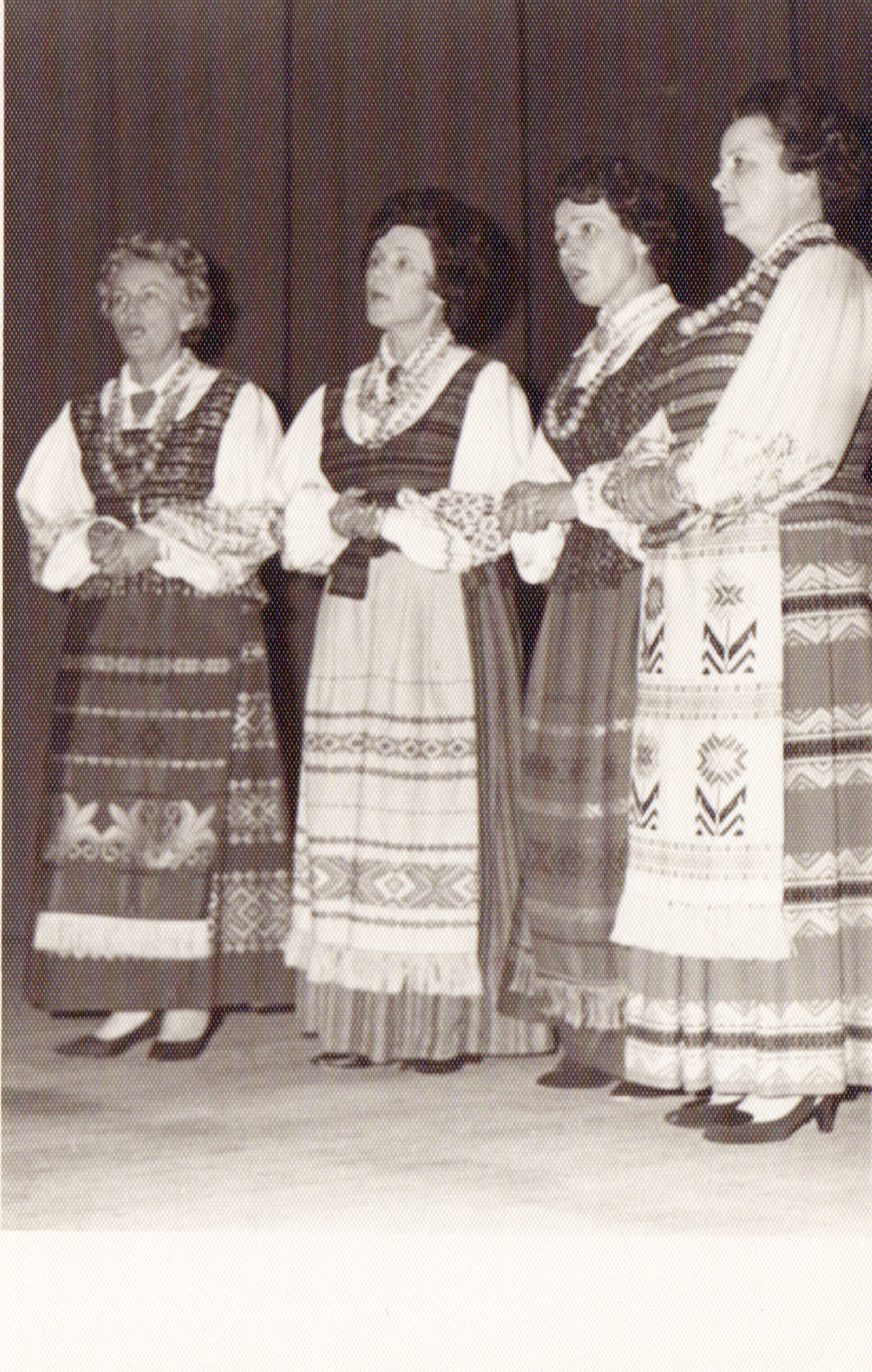
Uršulė Juciene, Anelė Urnevičienė,
Birutė Budrienė, Teresa Gasiunienė |
Kur bėga Šešupė, kur Nemunas teka
Tai mūsų tėvynė, graži Lietuva
(Where
the Šešupė runs, where the Neman flows That's our homeland, beautiful Lithuania)
Almost
every Lithuanian can recite these words by heart. It is so well known that it
is treated as an unofficial national anthem.
The
Adelaide Lithuanian Catholic Women from 1961 organised an annual “Šupini”
(mixed concert). The women wanted to
strength these concerts with Lithuanian songs and so a women’s vocal quartet
was formed. It was led by Anelė Urnevičienė.
The
quartet first performed on May 15th 1965. The group comprised of Birutė Budrienė, Uršulė
Juciene, Teresa Gasiunienė (soprano), and Anelė Urnevičienė (Alto). They were accompanied on the piano by Nemira
Masiulytė Stapleton.
The
group was a great success and so began to perform at festivals, literature
evenings, gatherings, national festivals, at Baltic gatherings and at the
Baltic homes.
On
occasion they became a quintet with soprano Agota Kaminskienė. On other
occasions N. Urmerienė and N. Vitkunienė joined them.
In
1971 they released an album of 16 songs, the record was called “Rankšluostiniausiu
Lietuva Tėvyne”. They chose the name of Nemuno Dukros (Daughters of the
Nemunas). Performing on the album were members
Birutė Budrienė, Agota Kaminskiene, Uršulė Jucienė, Anelė Urnevičienė The first
side was accompanied Rasa Kubilius and the second by Nemira Masiulytė. J Česna produced it, the
covering photo was taken by A. Budrys, cover design by Pranas Pušdešrys and
Administrator was P. Gasiunas, advisor was soloist A. Gučiuvienė. The record was launched at the Lithuanian
Catholic centre on February 22, 1972.
At various
times the group was accompanied by Nemira Masiulyte-Stapleton, Rasa Kubiliutė-Mauragienė,
Maria Dumčiuviene, R. Ziukelytė, Svietynas Kubilius, R. Pranckunaitė, S.
Vasilauskienė, Dalia Kaminskienė, Father A Savickas, R. Kubaitienė, Algis
Laurintaitis, and organ player J. Ramanauskas.
 In
1975 Uršulė Jucienė left the group and Saulenė Pusdešrienė joined. It was again a quartet which remained until
1981. During that year Anelė Urnevičienė
left and Saulenė Pusdešrienė became leader. In 1984 two young singers joined,
Judita Nekrošius and Zinaida Vencius. Now a quintet they sang where they were asked
and required.
In
1975 Uršulė Jucienė left the group and Saulenė Pusdešrienė joined. It was again a quartet which remained until
1981. During that year Anelė Urnevičienė
left and Saulenė Pusdešrienė became leader. In 1984 two young singers joined,
Judita Nekrošius and Zinaida Vencius. Now a quintet they sang where they were asked
and required.
On 30
November 1985 at the Lithuanian Catholic Centre a concert was held to celebrate
the 20th year of the group. Birutė
Budrienė, Agota Kaminskienė, Judita Nekrosienė, Zinaida Vencienė sang with
Saulenė Pusdešrienė as Manager. Also performed
was Sietynas Kubilius who gave a recital.
While the singers rested their husbands poet Kazimieras Kaminskas
recited a poem and Pranas Pusdešris spoke.
Pranas also made the stage decorations. The concert was choreographed by Elena Varnienė.
In
1986 the choir was invited to perform at Melbourne’s Lithuanian catholic
Women’s 35th anniversary.
They were accompanied by Zita Prašmutaitė.
Another
Nemuno Dukros concert was given on December 9th 1989 with the same
quintet as previously, the same manager and accompanist. Twenty eight songs were sung, the first half
was called Nemuno kloniais (Nemunas hollows) and Tėvynės laukais (fields of
homeland). The second half ‘Ilgesio
dainos’ (songs of longing) and Lietuva širdyje nešu (Lithuania, I carry you in
my heart).
Pranas
Pušdesris wrote of them
Gyvuokite,
dainuokite ‘Nemuno Dukros’, išeiviškos nostalgijos pagimdytos, ją sugebančios
perduoti savo dainose, kad mes vis giliau pasinėrę svetimybių jūroje, nepamirštume
Nemuno ir Tėvynės, aušros nušviečiamais keliais.
Following
her husband’s death in 1991 Saulenė Pusdešrienė hesitated to continue. Birutė
Budrienė is the only singer who has sung since the group was conceived.
Nemuno
dukros sing songs of longing, they celebrated Lithuania’s independence but in
their heart the pain of living over 50 years without being able to return to
their homeland still exists.
The
daughters of Nemunas sang well in to the 2000’s.
 |
Uršulė
Juciene, Anelė Urnevičienė,
Birutė
Budrienė, Teresa Gasiunienė
Accompanied by Rasa Kubiliute |
1. Nemunas is the largest river
in Lithuania. It flows through Lithuania
before draining into the Curonian Lagoon and then into the Baltic Sea at
Klaipėda. It is the northern border
between Lithuania and Russia's Kaliningrad Oblast in its lower reaches.




.tif)
