Showing posts with label St Casmir's. Show all posts

Wednesday, 6 July 2016

Annual Marian Procession


An annual Marian procession is led by Adelaide Archbishop in honour of St. Mary.  Held each May, a procession from Rostrevor College oval of Catholic priests and church members would walk to the Catholic seminary at Rostrevor. 


Lithuanian members would dress in their traditional National costumes, singing hymns and carrying the hand made banner of Mary. The banner when not in use hangs in the St Casimir chapel by the baptistery. 


Monday, 11 April 2016

Our parish priest

Father Juozas Nikodemas PETRAITIS MIC

Born on July 16th 1922 in Milgaudžius village in the Tauragė region to Juozapas and Marija.  He came from a farming family, the eldest child of four.  Juozas was active in the local church, and at about the age of 10 decided he wanted to be a priest.  He studied at Gaurės primary school, Tauragė High school and the Telšiai seminary.   During the war he moved to the Kaunas seminary.  He was drafted in the Red Army in 1941.   He fled into Germany with his mother, sister and two brothers.  They remained in DP camps, he was able to continue his studies at Eichstatte Seminary.  Following the end of the war, he travelled to Rome to continue his seminary studies.  He studied at the Gregorium and Angelicum University. 
In 1946 he joined the Marian fathers and continued his studies in America, Marina Hills Marion Seminary not far from Chicago.  He was ordained on Ascension Thursday 22 May, 1952 at St Raimund Cathedral.  In 1953 he moved to St Gabriel the Archangel Lithuanian parish, in Milwaukee.  Juozas wanted to further his studies, which he did at Jesuit University of Marquette.  In 1956 he served as parish priest  at St Peters in Kenosha, where he obtained US citizenship.

He served as Chicago as provincial secretary of his order. 
In 1963 he was sent to Argentina, where he learnt Spanish.  He worked at Lithuanian parish of Santa Fe then in 1967 transferred to Aušros Vartos parish in Avellaneda Buenos Aires where he worked for 17 years.

When Adelaide priest, Father Spurgis became ill, Juozas came to Adelaide initially for three months.  He returned to Argentina but was again summoned to help in Adelaide. 
From July 1984, he became the Adelaide priest.  During his time here he also became the Spanish migrant chaplain having learnt Spanish in Argentina.

Father Petraitis served the Adelaide Lithuanian community until the age of 91 when he moved into a nursing home.  He was able to recite the Rosary prayer in five languages, Lithuanian, Latin, German, Spanish and English.  He also spoke passable Italian and Portuguese.
He returned home to Lithuania just once in 1994, for a six week visit.

Ilsekis ramybeje.  

Wednesday, 23 July 2014

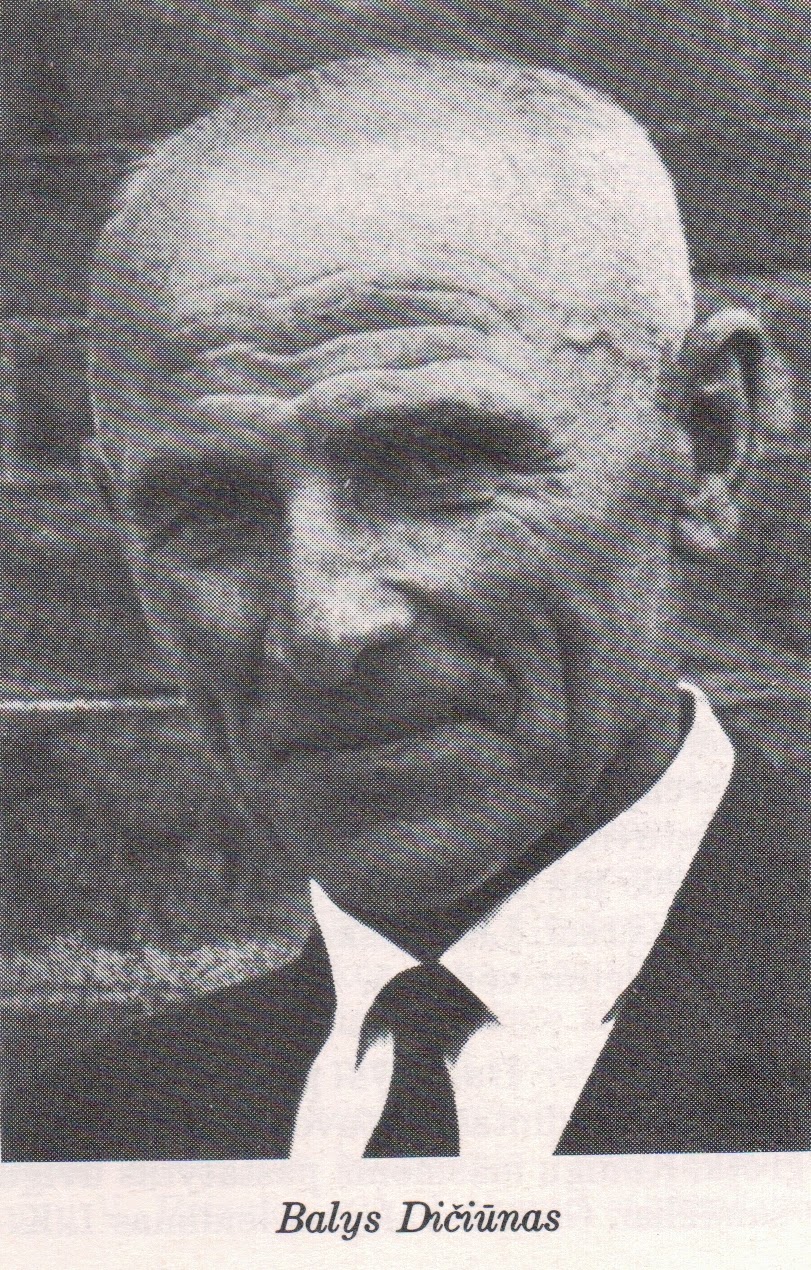
Balys Dičiūnas

Balys Dičiūnas

ALB Adelaide Committee vice-president, Lithuanian Caritas vice president, Lituania choir patron and an active member of almost every other Lithuanian group in Adelaide.
He was one for the first to organise the Young Christian group and assisted in their summer camps.

His truck was a real asset to the community, one which Balys was extremely generous in using it for the community’s needs.  Travels to and from scout camps, when the school needed a Christmas tree, Balys found one, cut it down and transported it to the school.   His time and truck were donated for free.


He was well known for his putting his head down and working hard.  He worked tirelessly on the Adelaide Lithuanian Church’s Christies beach property, building fences, sports area, levelling the site, creating a garden and path and planting the lawn.

Article on Balys Dičiūnas as he celebrated his 50th Birthday (Teviskes Aidai 24 Gruodzio 1958.

Thursday, 3 July 2014

Record launch for Vaskas


On 3 August 1969, at the St Casimir church hall, Genovaitė launched her USA produced record. It was the first record launch for the Adelaide Lithuanian community and 120 people attended.  The table were beautiful laid with tablecloths on which was placed hot tea and coffee and cake.  On a long table to the side of the hall a table was used to display Genė’s programs from her concerts, over 100. If one was to place programs from every appearance of the singer in the last 20 years, there would be several hundred on display. 

The evening began with J. Stepanas saying a few words.  A congratulatory telegram was then read, sent by Australian Community President Narušys.  Adelaide Lithuanian Cultural committee president Petkunienė also spoke.   Pranas Pusdešris also spoke of Genė’s talents and read several comments made after several of her performances. 

The record has eleven songs, of which three were recorded live.  The men’s octet Klajunai sang a cheer for their director. 

Genė sang two songs on the evening.


 MP 1969 rugp 19.

Wednesday, 25 June 2014

Father Spurgis

Budriene and Father Spurgis
The second Catholic priest to minister to the Adelaide Lithuanians was Father Albinas Spurgis.  He was born September 6th in 1907 in Panevežys.  He attended the Ukmergė school and later the Seminary in Kaunas.  He was ordained a priest on June 23rd 1932.  From 1932 he spent two years at St Peters and Paul’s church in Panevežys and three years in Panevežys cathedral. From July 1938 he was at the Gelažių parish and Simonys. From December 12th 1943 he held the office of the Dean of Kupiškas.

He left Lithuania in 1944 and made his way to Germany, Oberfalce in Bavaria in the town of Weiden, where he assisted the church.  He established a Lithuania camp where he was the chaplain and Weiden Lithuanian school director.

He emigrated to the USA in 1949 and lived in Cleveland in the St Joseph’s church.  He was here for four years.  In 1953 he left for Rome and entered the Marian congregation, where he remained for  two years.  He returned to Chicago and entered pastoral work and travelled to Lithuanian congregations.  In 1958 he was appointed to the Marian newspaper “Friends’.

In 1969 he arrived in Adelaide and became the second Catholic priest for St Casmir’s.  He arrived on 27 November to a community meal with 60 parish members present.   During the evening Father Spurgis told those present that he had heard alot about the Adelaide community in Chicago, mainly from J. Bačunas and Bishop V. Brizgys


Father Spurgis died on 7th October 1985 10 07 in Adelaide.

Tuesday, 17 June 2014

The first year of the Adelaide Lithuanian Women's Catholic Society

1961, the Lithuanian Catholic Women's society had been active for one year.  This is their first annual report.
Father Kungys, centre with members of the Adelaide Lithuanian Catholic society

St Joseph's and later St casimir church decorations and cleaning.  Flowers for the church with a roster ending at Christmas for the year.

Catering for the St Casimir volunteer workers.  From 3 March 1960 to 16 April 1961 they organised 35 lunches, feeding over 500 volunteers.

Organised Father Kungys 15 year jubilee as a priest.

Buffets prepared for various balls throughout the year, Sunday Voice newsletter ball, SA Lithuanian Catholics Ball, St Casimir’s opening of the church where over 200 people attended.

Together with parents organised supper for children receiving their first communion.
Supper for the school children end of year program.  Tea, coffee and snacks for the break during Lithuanian school.

Community Christmas Eve meal where 83 people attended.

Organised church clothing, including, 6 chasubles, alter and tabernacle, coverings for the altar, cross and statue.

The women collected 8 packages of donated clothes and footwear to be sent for the clergy at the St Casimir seminary, Rome.

The women’s committee members attended the Australian Lithuanian Catholic gathering.
The years earnings was £748.14.4 of which over half was used to purchase food and befet furniture.  Treasuer was A. Mainelienė.

A new committee was elected, A. Mainelienė, E. Kervelienė, S. Pusdešrienė, M. Gerulatienė, A. Uldukienė, G. Opulskienė, K. Dičiūnienė.


Teviskes Aidai 1961 gegužes 9d. Nr 18

Sunday, 13 April 2014

St Casimir festival 1961

The Adelaide Catholic community celebrated the holy day of St Casimir over three days, 2-4 March 1961. Over those days Father J. Kungys said prayers each day. In the evenings at the St Casimir chapel mass and special prayers were offered for the persecuted church in Lithuania. A formal offering was taken up on the Sunday. On the Sunday Adelaide Auxiliary Bishop James Gleeson (Later to become Adelaide’s first priest to become Archbishop) near the altar met some Lithuanian scouts, members of the community in national costume and members of the Lithuanian Catholic Committee.

The offering was given in English by Father Kungys using passages from Ecclesiastes and referring to the persecuted Catholics in Lithuania at that time, those martyred and tortured. Bishop Gleeson then took the opportunity to refer to the Lithuanian continued devotion to St Casimir and that God hears the hopes and prayers of his faithful. He declared that Lithuania will one day be free again. Bishop Gleeson encouraged Lithuanian parents to pray that their children may be called to enter the priesthood or sisterhood.


Wednesday, 25 September 2013

Summer youth camp, 1970

The Catholic organised a summer youth camp from 2 to 14th of January at ‘Kurša’ the Latvian camp grounds at Aldinga beach.  It wasn't the best place for a camp site as it was a bit far from the beach and the breezes cool. 

The camp was lead by Nemira Masiūlytė, assisted by R. Kubiliutė. Camp commandant was D. Karpys, camp cook was Visockiene, Janilionienė and Marcinkevičiutė.  Every evening father Kazlauskas and Father Spurgis would hold readings and discussions.  Guests spoke on various topics, L. Pakalnis spoke about Lithuanian poetry, A Kubilius spoke about practical Catholicism, M. Gavienienė about catholic ideology, V. Straukas and Father Spurgis led a discussion of youth issues, G. Kaminskas spoke on the Lithuanian language.  V. Vosylius gave a slide show featuring Lithuanian scenes.  P. Pusdešris spoke on and led a traditional partisan evening with a crown of flowers being let out to sea.
There were 25 children at the camp, with five of them had travelled from Melbourne.

The final day of camp, Father Kazlauskas said mass, followed by the youth showing what they had learned throughout the camp, singing national dancing, recitals. 

Monday, 16 September 2013

Mother's Day concert 1970

It has become traditional for a Mothers day concert to be held by the Adelaide Lithuanian community.  When there were two schools, there were two concerts.  St Casimir’s school children held a concert after Father Spurgis had given mass. The children all marched into the church hall to pin a flower to their mother as they sat by the tables ready for the concert.

A welcome was given by the school principle K. Pažera, followed by B. Dičiūnas on behalf of the Catholic centre. Lithuanian Catholic Women’s president, Teresė Gasiunienė and A. Kubilius also spoke briefly.

Aušros Vartu Marijos (The gates of dawn holy Mary) and live flowers decorated the stage. Poems were recited by Vincas Bagušauskas, Viktoras Dunda, Kristina Stankevičiutė, Andrius Vitkunas, Brigita Paul, Edis Jucius, and Aidas Kubilius.  Regina Pranskūnaitė, Sietynas Kubilius, Petras Urnevičius and Saulius Kubilius recited more poems.  In between the children’s choir sang, and teacher, R. Kubiliutė sang a song about mothers.  Regina Pranskunaitė and Ramunė Varnaitė played the piano.  Also present were senior Catholic Youth, Linas Kubilius who read part of Vaižgantis writings and Gintaras Kubilius read Father Krasauskas thoughts about mothers. 

Juozas Tumas, also known by the pen name Vaižgantas (September 20, 1869 - April 29, 1933), was a prominent Lithuanian writer, Roman Catholic priest, social activist, literary historian, and one of the founders of the Party of National Progress. He wrote novels, short fictional pieces, and non-fiction. His most notable works include the novel Pragiedruliai (Rays of Hope) and the narrative Dėdės ir dėdiėnes (Uncles and Aunts). Tumas is considered one of the most important Lithuanian writers of his era.


A mother’s day concert was also held at Lithuanian House on the same day.

Monday, 29 July 2013

Easter celebrations 1961

On April 9th, 1961 an Easter Egg exhibition was held at St Casimir’s church hall.  The Easter granny  (Velykų Bobutė) was present to give chocolate eggs out to over 100 children.  The program was instigated by A. Stepanienė, who warmly thanked all for coming to the event.
  
The church stage was decorated in green foliage, with a window of Easter granny house. From here  you could see the children begin their performances, of dancing, poems, games and a pageant.  Mr A Barauskas read the story of the Easter legend.  Keršytė read, M. Staugaitė and M. Blaževičiutė performed a dance.  K. Kuncaitis, V. Bardauskaitė, J. Juciutė and R. Staugaitė beautifully recited from memory an Easter poem.  R. Kubiliutė narrated a long story about the Easter bobutė.  L. Varnas and V. Gudiškis staged Easter egg painting.  N. Vyšniauskaitė and R. Kubiliutė read from works of Antanas Baranauskas, a famous Lithuanian author.  

After another dance the performances continued.  V and F Antanaitytė’s, D. Barauskaitė, R. Jasiūnas and J. Beinoravičiutė recited poems.  The Easter bobutė signalled from her house window and a flock of rabbits to appeared, G. Kubilius, L. Varnas, A. Blaževičius, J, Juciutė, S. Valčiukas and M. Blaževičiute.  They each held baskets filled with Easter eggs.  They greeted the surprised children and danced a rabbit dance.  Following this, the rabbit flock came down from the stage and handed out chocolate eggs with everyone in the hall.  

The event was organised by E. Varnienė, A. Stepanienė, A. Zakienė and K. Pažerienė.  The Catholic Women’s group prepared a supper for the performers and parents who sat and enjoyed the delicious food. 

Monday, 8 April 2013

Father Juozas Kungys

Father Kungys the day he was made a Priest

Juozas KUNGYS

14 February 1919 – 4 March 1962

Born in Rensciu village near Telsiai in Samogitia, Lithuania.  He attended the Telsiai school and then the Telsiu seminary.  The war intervened and he was unable to complete his studies.  Following the second Soviet invasion of 1944, he fled to Germany.  Here he attended the Eichstaett seminary which he finished on 29 July 1945.

From 1946 to 1949 Father Kungys lived in Freiburg, Germany where he furthered his theological studies in the Frieburg University.  He provided pastoral care to Lithuanians in Hechingen, Rottweil, Trassingen, Schweningen.  He joined the Ciurlionis choir during those years.

On the 31 May 1949, father Kungys arrived in Melbourne aboard the ship Skaugum, which carried many refugees from war torn Europe.  He first resided in Uranquinty migrant camp just outside the township of Wagga Wagga, then in 1950 moved to Brisbane where Lithuanian religious language services were introduced by Father Kungys.   In 1951 he moved to Melbourne, as second priest to the community.  Whilst in Melbourne he was one of the first teacher offering Lithuanian language courses for people who were not able to complete their secondary studied in Lithuania or studied Lithuanian in Displaced Persons camps prior to coming to Australia.  Not long after he moved to Geelong to St Mary’s an Australian parish. 
Father Kungys with the first child he christened

Father Kungys was very involved in the Lithuanian community in Australia.  He instigated the Australian Lithuanian Catholic Federation and later served as president and spiritual leader.   He was one of the imitators of the Melbourne Catholic newspaper “Teviskes Aidiai” (Echoes of our Homeland).  The newsletter is still published.

He came to Adelaide in 1957 and was thrust into the establishment of the Lithuanian Catholic Centre and church.  A petition signed by 480 Lithuanians was organised to gather support for the communities own church.  Permission was granted and a suitable place was sought.
On 30 November 1960 the church was consecrated in honour of Lithuania’s patron saint, St Casmir, situated in Third Ave, St Peters.

On 7 August 1960 the Adelaide community celebrated Father Kungys 15 year anniversary of becoming a priest.

He was a member of the Australian Lithuanian National Committee, and 1954 – 1955 was Adelaide Community President.  His health was failing and in 1957 he spent a time in hospital recovering. 

In 1961 Father Kungys moved into the Adelaide Lithuanian Catholic Centre all priests since that time have resided.  His health deteriorated further, a bad heart combined with asthma restricted his activities.  On 16 February (Lithuania’s Independence Day) 1962, Father Kungys gave his last mass.

On March 4th 1962, Fr Juozas Kungys died at the young age of 43 at Calvary hospital.  The corridor was filled with Lithuanians who spent his last moments as near to him as possible.  Father Vaseris gave the last rights. The following day Father Kungys was laid out at St Casmir’s  church where Father Vaseris and Father Butkus presided over the funeral.

Father Kungys is buried at Centennial Park cemetery.
Father Kungys with girls at their first communion

Thursday, 7 February 2013

St George & St Anthony

Šv Jurgis

Saint George (c. 275/281 – 23 April 303) was a Greek who became an officer in the Roman army. He became an officer in the Roman army in the Guard of Diocletian. He is venerated as a Christian martyr.  Saint George is one of the most venerated saints in the Catholic , Anglican, Eastern Orthodox, and the Oriental Orthodox churches. He is immortalized in the tale of Saint George and the Dragon and is one of the Fourteen Holy Helpers. His memorial is celebrated on 23 April, and he is regarded as one of the most prominent military saints.


In memory of her husband, B. Zilinskiene. 1974


Šv Antano vitražas.
St Anthony of Padua (1195-1231), the most celebrated of the followers of Saint Francis of Assisi, was born at Lisbon on the 15th of August 1195. In his fifteenth year he entered the Augustinian order, and subsequently joined the Franciscans in 1220. He wished to devote himself to missionary labours in North Africa, but the ship in which he sailed was cast by a storm on the coast of Sicily, whence he made his way to Italy. He taught theology at Bologna, Toulouse, Montpellier and Padua, and won a great reputation as a preacher throughout Italy. He was the leader of the rigorous party in the Franciscan order against the mitigations introduced by the general Elias. His death took place at the convent of Ara Coeli, near Padua, on the 13th of June 1231. He was canonized by Gregory IX. in the following year, and his festival is kept on the 13th of June.

St Anthony is often portrayed meditating on an open book in which the Christ Child himself appears. Over time the child came to be shown considerably larger than the book and some images even do without the book entirely.

St Anthony is venerated all over the world as the Patron Saint for lost articles, and is credited with many miracles involving lost people, lost things and even lost spiritual goods.

Consecrated September 1974.  Last of the windows.

Monday, 4 February 2013

Suvalkija stained glass window

Suvalkiečių vitražas. Marijampolės bažnyčia. Dievo Tarnas arkiv. J. Matulaitis.
Paiminklas Rainių miškelio kaniniams. Rimšos vargo mokyklą.

Suvalkietis region stained glass.  Marijampole church and J. Matulaitis.

Suvalkija is the smallest of the five cultural regions of Lithuania. Its unofficial capital is Marijampolė.

Jurgis Matulaitis, born 13 April 1871 in the village of Lūginė, near Marijampolė, was a Roman Catholic Bishop of Vilnius from 1918 to 1925 and founder of the Sisters of the Immaculate Conception of the Blessed Virgin Mary. On 28 June 1987, Pope John Paul II beatified him as the Blessed Jurgis Matulaitis.

Petras Rimša (November 3, 1881 in Naudžiai, Vilkaviškis district (Suvalkija) – October 2, 1961 in Kaunas) was one of the first professional Lithuanian sculptors and medalists.
Rimša's early works are highly patriotic and realistic. His early work The Lithuanian School (Lietuvos mokykla also Vargo mokykla) depicts a mother teaching her child to read in his native Lithuanian language in between her yarn spinning. This has become a symbol of the Lithuanian resistance to the Lithuanian press ban (1864–1904) and was featured on the 5 litas banknote. It was inspired by his personal childhood education and experiences of his book smuggler brother.

At the bottom is written; Dieve grąžink laisvę kenčiančiai tautai. Suvalkiečiai 1972
God, Free the suffering nation. Suvalkija 1972.

Friday, 1 February 2013

The gates of Dawn stained glass window

Aušros vartų Mergelės vitražas. Iruoštas Kun J. Kungio atminimui.

Blessed Virgin Mary and the gates of dawn.  In memory of Father J. Kungys.

The Gates of Dawn is the only remaining of the nine city gates built in Vilnius, built in 1503. The Chapel in the Gate of Dawn contains an icon of The Blessed Virgin Mary Mother of Mercy, said to have miraculous powers.

Sanctified 6 September by Father A. Spurgis.


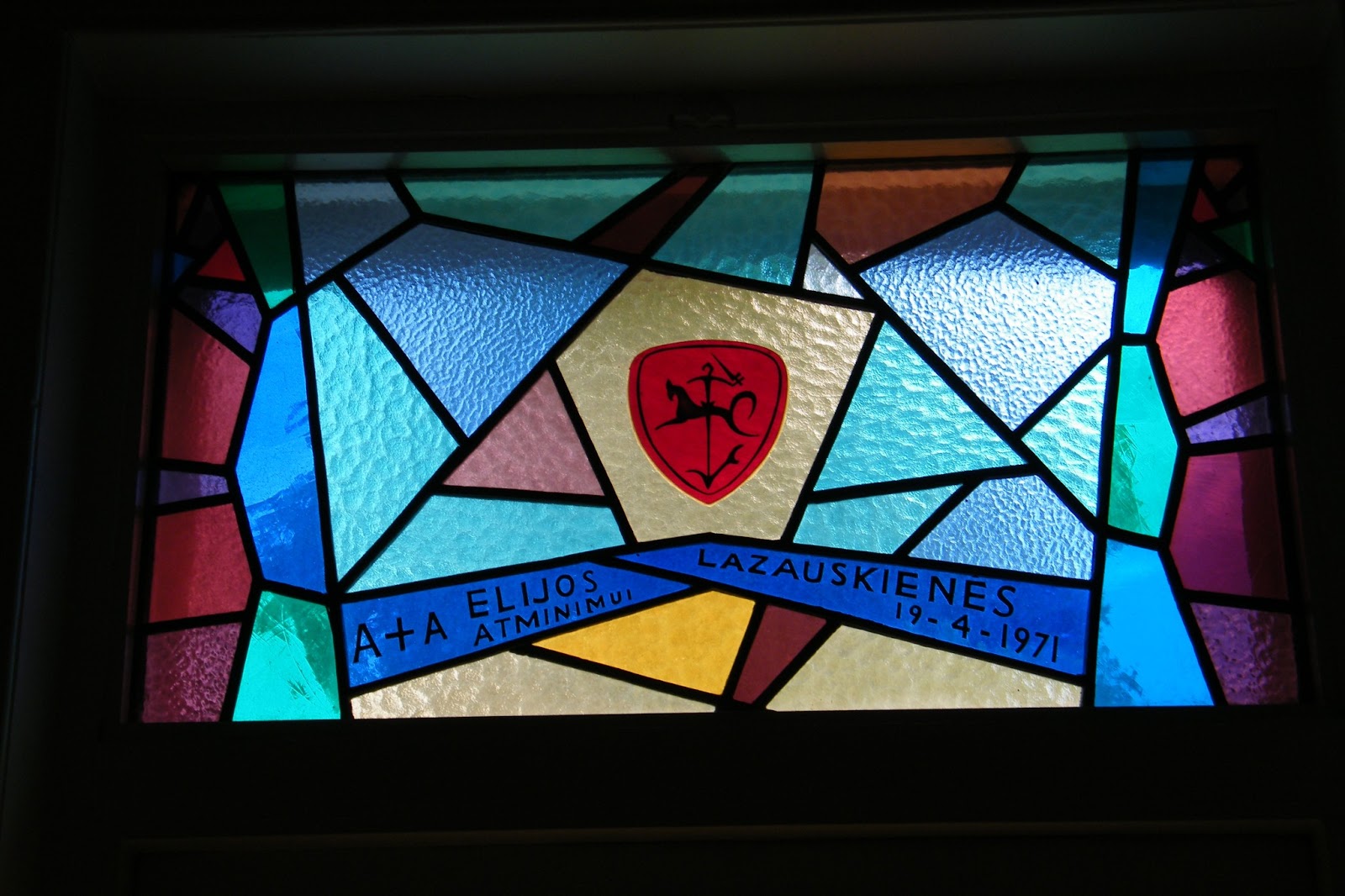
This window is above the side entry door to the church.  It is in memory of Elija Lazauskiene who died 19 April 1971.

Wednesday, 30 January 2013

Panevezys stained glass window

Panevėžiecių vitražas, įruoštas vysk K. Paltarako atminimui. 
Panevežio katedra ir didžiajame altoriuje esantis Kristus Valdovas.

Panevėžys stained glass, in memory Bishop K. Paltarakas.  Panevezys’  Cathedral, is in the background.

Bishop Kazimieras Paltarokas was born in 1875, he was bishop of Panevezys for over 30 years.

Funds for this window was organised by I Račiunas.  Designed by sculptor Ieva Pocius.   Ieva was from the Panevežys region.

This window was sanctified in June 1971.

Monday, 28 January 2013

Christianity comes to Lithuania

Lietuvos krikšto vitražas. Vytauto bažynčia Kaune.
Sukaktuvinis Vytauto Didžiojo medalis. Mindaugo krikštas.

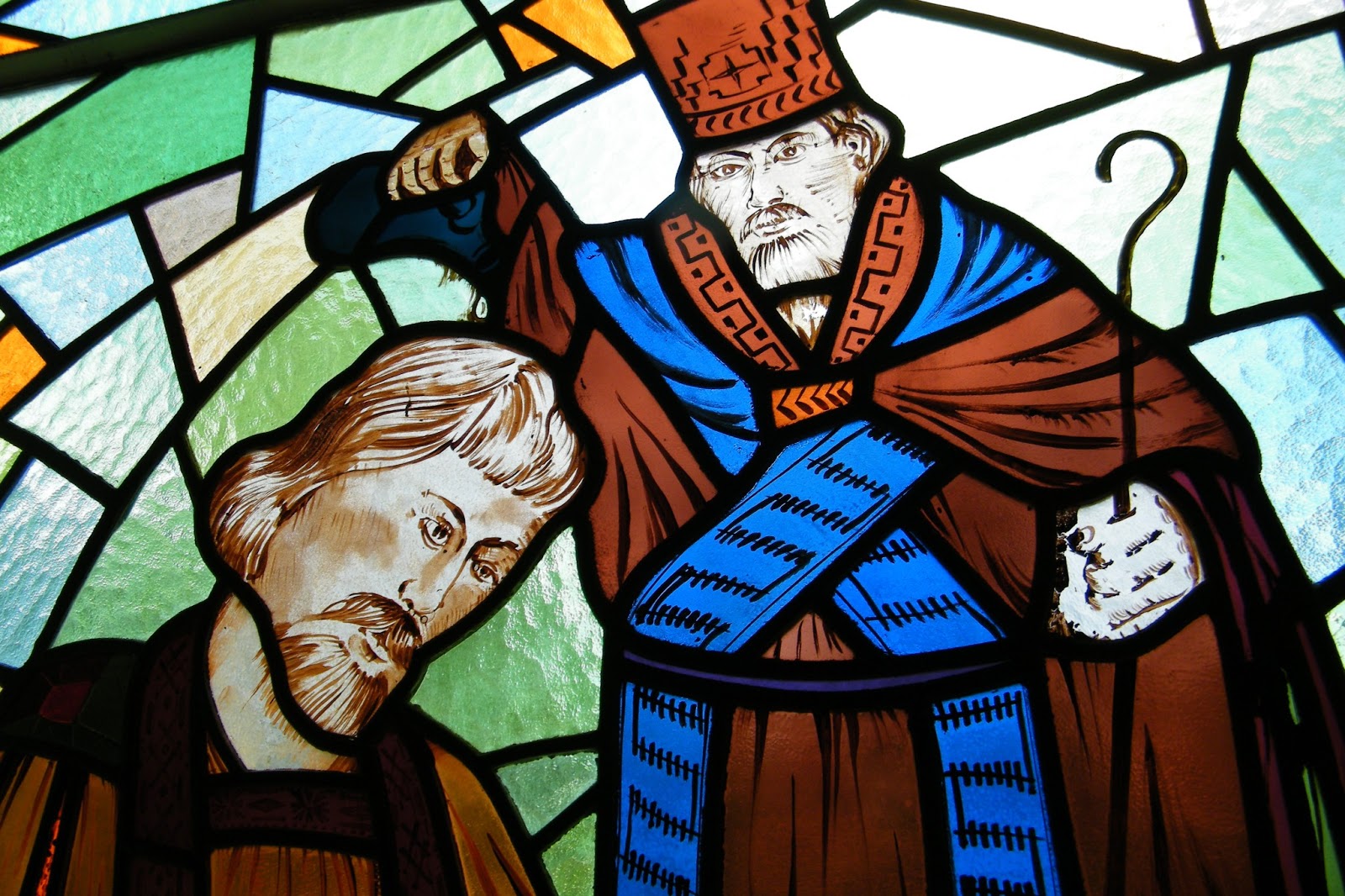
This window is titled the Baptism of Lithuania.  It features Vytautas Didysis church in Kaunas, and King Mindaugas’ baptism.

Vytautas "the Great" c. 1350 – October 27, 1430) was one of the most famous rulers of medieval Lithuania. Vytautas was the ruler (1392–1430) of the Grand Duchy of Lithuania which chiefly encompassed the Lithuanians and Ruthenians.

In modern Lithuania, Vytautas is revered as a national hero and was an important figure in the national rebirth in the 19th century. Mindaugas (ca. 1203 – fall 1263) was the first known Grand Duke of Lithuania and the only King of Lithuania.

War ravaged the country at that time.  Duke Mindaugas became concerned about the onslaughts on the battlefield and tried to save Lithuania by diplomacy.  As an initial step, he accepted Christianity in 1251, thereby depriving the Order of their only excuse for further invasion of his country. He hoped that by accepting Christianity, this would stop the Crusaders from enforcing the "true and proper faith" onto the heathen Lithuanians so he and his immediate family became Christians purely for political reasons.

Having been baptized and having established the Church in Lithuania, he was crowned by Pope Innocents IV on July 6, 1253 as the first King of Lithuania. Mindaugas was an exceptional diplomat, statesman and a military genius who built political, economic and cultural bridges to modern Europe. It was during his reign that the country adopted Roman Catholicism.

Created 1972 based on sketches by Pranas Pusdešris.  

This window was paid for by left over funds raised for the Suvalkija window.  It was consecrated by Father Pranas Dauknys in 1972.

A plaque at the base of the window notes the donors.

Šv Kazimiero Parapijos Taryba
A.L Moterų Draugija
Adelaidės Ateitininkai Sendraugiai
Adelaidės Moksleiviai ateininkiai
Šv Kazimiero Savaitgalio Mokykla
Šv Kazimiero Parapijos Choras
Adelaidės Lietuvių Choras Lituania
Adelaidės Akademikų Skautų Sąjunga
L.V.S Ramovė
ALT Akadėminis Sambūris
Adelaidės L.B Apylinkes valdyba
Adelaidės LSK “Vytis”

P Iz Bakšiai
Detail of above window
+ T.A Binkievičiai
J.A Janusaičiai
O.J Karlai
+ A.K Karpys
S. Lelienė
+ L. Matukienė
A.A Morkūnas
+ V. Raginis
Juozapas Rupinskas
J. Storpirštis
+ O.K Storpirščiai
+ S. Šilingas
S.K Valinčiai
Z. B Venčiai
V. Vilčinskas
J. Zelenekas
V.A Vieraitis

Friday, 25 January 2013

Žemaičių (Samogitia) stained glass window


Žemaičių vitrazas. Vysk M. Valančius. 
Kražių skerdynių pavaizdavimas. 
Žemaitijos herbas.
This window features the Bishop Mikolas Valančius, Bishop of Samogitia, Kražiai symbols and the Samogitian coat of arms.

The originator of Lithuanian fiction prose M. Valančius was born on February 16, 1801, in a village of Nasrėnai near Salantai (Kretinga district) in the family of a rich peasant. He studied at the Dominican School in a town of Žemaičių Kalvarija, Varniai Clerical Seminary, and at Vilnius Clerical Academy. In 1828 M. Valančius became a priest. He was holding high posts as a professor at Vilnius and St. Petersburg Clerical Academies, rector of Varniai Clerical Seminary, and in the year of 1850 he became the Bishop of Samogitia. 

He was establishing parochial schools, took care of publishing and distribution of Lithuanian books, organized a wide net of temperance societies that tried to divert the peasants from alcohol.

M. Valančius died on May 17 in the year 1875.

Kražiai is one of the older settlements in Samogitia.  It was declared the centre of Samogitia in the 15th century.  he town is remembered in Lithuania as the site of the "Kražiai Massacre" of 1893. As part of its campaign against Lithuanian nationalism focused on Catholicism, the Russian government decided to tear down the local Catholic monastery church. After petitions to save the church were rejected, people began to gather at the church to prevent the removal of sacred objects. This alarmed Kaunas Governor Nikolai Klingenberg, who led a force of police and Cossacks that invaded the church and brutally drove the people out and into the nearby Kražantė River where six of them drowned.

The Samogitian coat of arms features a black bear with white collar on a red background.  The origin of the Samogitian coat of arms is possibly related to the legendary theory of the Roman origin of Lithuanians. According to this story one of the Roman tribes that settled in Lithuania was named Ursinai (lat. ursus = bear). If this is true, then it is not clear if the Roman origin of Lithuanians is supported by the Samogitian use of the bear or if the Samogitians cleverly used the bear to develop the legend.

Made in 1971.
Dieve Žemaičių viltys tavyje (God of Samogitia we have hope in you).

Tuesday, 22 January 2013

Stained Glass windows of St Casmir’s church

The Lithuanian Catholic church of St Casmir in St Peters has numerous statues, and detailed coloured stained glass windows, that tell many stories of Lithuanian history.  The windows have been created in memory of individuals who contributed greatly to the Lithuanian Catholic centre or in memory of Lithuania.

In 1969 Father Spurgis came from Chicago to lighten the duties of the ailing priest at that time Father Kazlauskas.  Father Spurgis initiated a comprehensive works program.  Under his guidance a national shrine was erected, a baptistery and five stained glass windows commemorating the five diocese of Lithuanian were added to the chapel.   Father Spurgis had envisaged a church decorated in stained glass depicting Lithuania.   In total the windows cost over $10,000, produced in the early 1970’s.  The windows were built by artist Stasys Kerulis.

The largest of the stained glass windows depicts St Casmir, patron saint of Lithuania.  The window is located behind the alter.  To the far right you can see Gediminas tower. 

Gediminas' Tower s the only remaining part of the Upper Castle in Vilnius.  It is an important state and historic symbol of the city of Vilnius and of Lithuania itself.  It is depicted on the national currency, the litas, and is mentioned in numerous Lithuanian patriotic poems and folk songs.

To the left of St Casmir is the Three Crosses (Lithuanian: Trys kryžiai) based on a monument in Vilnius. Designed by Polish–Lithuanian architect and sculptor Antoni Wiwulski in 1916, it was torn down in 1950 by order of the Soviet Union authorities.  A new monument designed by Henrikas Šilgalis was erected in its place in 1989.  The crosses stand on Kalnai Park, overlooking the old town of Vilnius, very close to Gediminas’ tower.

Saint Casimir Jagiellon (Lithuanian: Kazimieras; October 3, 1458 – March 4, 1484) was a crown prince of the Kingdom of Poland and of the Grand Duchy of Lithuania who became a patron saint of Lithuania, Poland, and the young. His feast day, the Saint Casimir's Day, is marked annually with Kaziuko mugė (a trade fair) held on the Sunday nearest to March 4, the anniversary of his death, in Vilnius.  Surviving contemporary accounts described Prince Casimir as a young man of exceptional intellect and education, humility and politeness, striving for justice and fairness.  

He is usually depicted as a young man in long red robe lined with sloat fur. Sometimes he wears a red cap of the Grand Duke of Lithuania, but other times, to emphasize his devotion to spiritual life, the cap is placed near Casimir. Usually he holds a lily, a symbol of virginity, innocence, and purity. He might also hold a cross, a rosary, or a book with words from Omni die dic Mariae (Daily, Daily Sing to Mary). He was canonized by Pope Adrian VI in 1522 and is the patron saint of Poland and Lithuania.


Sunday, 12 August 2012

The lost archives

I call it the lost archives, it wasn't really lost, just neglected.  I am referring to the St Casmir Church Archives, located in the Lithuanian Catholic Centre at St Peter's.  I can remember going in their once probably 30 years ago, I remember it as small, dark and had lots of stuff.  

In a locked room off the presently used Lithuanian school this room sits, it has had very little activity for many years.  As I have been speaking to community members about the Archives I have been surprised that many have not known it existed, this includes people who were active in the church.

As work has begun in earnest on the Australian Lithuanian Archives it was suggested that this Archive be merged with the others.  With great honour and excitement the keys were transferred to me with open access.  I certainly wasn't disappointed with the rich history and records that have been preserved.

The Archives contains records that relate to the Adelaide Lithuanian Centre, this includes;
  • Administration records of the church
  • Minutes, finances of the Catholic Women's group
  • Records from the Lithuanian church school
  • Personal items relating to the Catholic Priests who lived here
  • Copies of journal, magazines and books
  • Church artifacts


Tuesday, 20 September 2011

St Casmir's School

Members of the St Casmir’s Lithuanian Catholic Centre, initiated the school in 1960. The schools main aim was to instill a belief in God, and preserve the Lithuanian language and culture in Adelaide. The school began with two teachers and seventeen students, and a year later it had eight teachers with Father Kungys who teaching Religion. Elena Varniene ws the first principal of the school.

The second floor of the parish building was perfectly suited for a school. It consisted of a large room which became the kindergarten, several small rooms were used for individual classes and another large room that held different activities. The parish also had a hall and stage where performances could be held.

The school was run on very similar lines to the weekend school held at Lithuanian house. School ran from 10am to 1pm each Saturday morning. In 1979 there were six classes plus kindergarten.
Initially school curriculum was obtained from America, lastly being used in 1974, when an Australian version was created.

The school began with six grades which rose to eight in 1972 and by 1980 there were ten grade levels.

Children who attended the school also participated in Lithuanian dancing, sports and Eiglutes choir.

Teachers were Elena Varniene who taught Lithuanian language. Agota Stepaniene – Lithuanian geography and history, Kazys Pazera – Lithuanian language, Aldona Zakiene – Lithuanian language, S. Pusdesriene – singing. L Vilcinskaite – national dancing, Rimas Daugalis – art, Laimute Kuncaityte – dancing and accompanied on piano.

Funding came from donations, the Lithuanian Catholic women’s Association, and occasionally donations were received from Ramove (Lithuanian veterans) and the general community.

From 1960 to 1989, 60 students completed school. In 1965, 103 students were enrolled, and over 300 attended over the years.

Directors of Sv Kazimiero
Elena Varniene 1960 – 1964
Pr Dauknys 1965
Kazys Pazera 1966-70
Kun Albinas Spurgis 1971-1973
Anele Urneviciute 1974-1976
Elena Varniene 1977
Loreta Rupinskaite 1978-79
Elena Varniene 1980 – 1981
Anele Urneviciene 1982.

Throughout the 28 year history, this school taught over 300 students taught by 60 teachers.

The names behind the Lithuanian Business, Maistas continued...

Jonas Šlyteris Jonas Šlyteris was born on 29 August 1895 in Smunkučiai village, Jurbarkas district, Lithuania. During the First World Wa...